'The King's Speech' has a really big chance on winning Oscars as it has won 6 BAFTA awards on the 13th of February and was nominated for even more categories.

Thursday, 24 February 2011
Oscars '11
We're almost there, Sunday 27th of February, the winners of the 83rd annual academy awards will be announced. It looks like there are 3 big films that have been nominated several times. 'The King's Speech', 'The Fighter' and 'The Social Network' have a really big chance of winning Oscars. All three of them are nominated for best motion picture of the year, best directing and best editing.

Monday, 31 January 2011
British Horror films between the 50s and the 00s
- 50s:
- the curse of frankenstein terence fisher 1957 hammer film productions
- night of the demon jaques tourneur 1957 sabre film production
- blood of the vampire henry cass 1958 Artistes Alliance Ltd.
- 60s
- the brides of dracula terence fisher 1960 hammer film productions
- Bunny Lake Is Missing otto preminger 1965 wheel productions
- the curse of the mummy's tomb michael carreras 1964 hammer film productions
- 70s
- scars of dracula roy W Baker 1970 EMI films
- the house that dripped blood peter duffell 1971 amicus productions
- the beast must die paul annett 1974 amicus productions
- 80s
- hammer house of horror james carreras 1980 chips productions
- the appointment lindsey c vickers 1981 First Principle Film Productions Ltd.
- the comic richard driscoll 1985 christobel productions
- 90s
- bad karma alex chandon 1991 Shape-Shifting Films
- drillbit alex chandon 1992 SOI Film Entertainment
- breeders paul matthews 1997 A-pix entertainment
- 00s
- beating the dog lawrence gough 2003 hoax films
- blood ties jimmy cheng 2006 Aspect Ratio Productions
- long time dead marcus adams 2002 Working Title Films
Tuesday, 18 January 2011
Golden Globe awards


Last Sunday on the 16th of january the winners of the annual Golden Globe awards were announced. The biggest winner of the night was without a doubt the film The Social Network. This movie made in 2010 received four Golden Globe awards. One for best motion picture drama, an award for best director which was David Fincher, one for best screenplay and the las Golden Globe was for best original score.
Actors and actresses won Golden Globe awards as well. The best leading roles were Colin Firth in The King's Speech, Natalie Portman for her role in Black Swan and the best performance Golden Globe was received by Paul Giamatti for is part in Barney's Version and to Annette Bening for her performance in The Kids Are Alright.


Monday, 3 January 2011
Hollywood stars Robert De Niro and Kate Winslet
Robert de Niro

Robert de Niro is considered to be one of the biggest stars of his time. His career as an actor started in 1973 with his first fame gaining role in ‘Bang the drum slowly’. The first big director he worked with was Martin Scorsese in his film ‘Mean Streets’ in 1973 as well. Other famous films he starred in were ‘The Godfather: Part II’, ‘Taxi Driver’, ‘Raging Bull’, ‘Goodfellas’, ‘Meet the parents’ and many others. His latest box-office film is Little Fockers which is directed by Paul Weitz. De Niro heads his own production company called Tribeca Film Center, and made his directorial debut with ‘A Bronx Tale’ (1993). He has several Awards and nominations, for instance for his role in The Godfather: Part II he won an Academy Award for best supporting actor. Academy Award nominations are what he got for his role in Taxi Driver (1976), The Deer Hunter (1978) and Cape Fear (1991). His role in Raging Bull gave him a best actor award in 1980. Robert de Niro often had to play brutal or even violent characters who were borderline psychotics. De Niro is also known for his method acting and for his heavily studying his character’s background. The main genres he is known for are action and comedy.
Kate Winslet
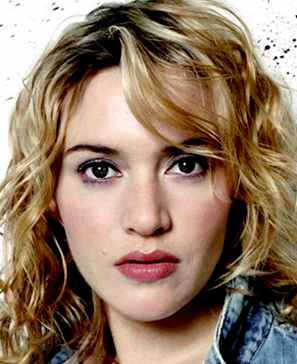 Kate Elizabeth Winslet had her big break in the film business at the age of 17. She was cast as an obsessive adolescent in Heavenly Creatures (1994). The next year she auditioned successfully for the role of Marianne Dashwood in Sense and Sensibility directed by Ang Lee. Kate received both a British Acadamy Award and an Oscar nomination for Best Supporting Actress for her part in this film. The role that turned her into an international star instead of being an art house actress, Was the part of Rose DeWitt Bukater in Titanic (1997). Her other most famous films she starred in are Revolutionary Road, Eternal Sunshine of the Spotless Mind, Finding Neverland, The Holiday and she also did the voice of Rita in the animation film Flushed Away. Besides being an actress, Kate Winslet is also a great singer. Her first single was called ‘What If?’ and reached the top ten in the UK. Winslet has had many different parts, but she is mainly associated with the parts of straightforward pretty-girls. Drama is the main genre of films she starred in. The film she just finished is called Movie 43 and it is directed by Elizabeth Banks. Other famous actors in this film are Emma Stone, Gerard Butler and Kristen Bell.
 Saturday, 27 November 2010
article film council
UK Film Council could have last laugh with
£1m donation to Thatcher biopic
If reports that The Iron Lady is 'some left-wing fantasy' are true, then Conservatives may not welcome the UKFC's final move
The credits have begun rolling on the UK Film Council. In July culture secretary Jeremy Hunt announced the disbanding of the body that funds UK films; on Monday morning, Ed Vaizey, minister for culture, communications and the creative industries, will explain how its duties are to be divvied up among existing organisations.
But the UK Film Council appears to be refusing to go out with a bang. One of its last large-scale donations has been to the forthcoming Margaret Thatcher biopic, The Iron Lady, which was awarded £1m in October.
Some see the move as an 11th-hour snook cocked at the Conservatives who, if rumours surrounding the script are to believed, may not welcome the project.
Tim Walker of the Daily Telegraph reports that Thatcher's family were "appalled" by the sound of the film, »
- Catherine Shoard
Sunday, 31 October 2010
Latest film news: headlines
The information for these headlines come from the website: http://www.empireonline.com/news
- - The new Mission Impossible that will be released on the sixteenth of December next year, finally has a title: Mission: Impossible - Ghost Protocol. - -
- - Step Up 4Ever will be released in 2012 - -
- - Avatar 2 and 3 are coming in 2014 and 2015 - -
- - The title of the third Batman film directed by Christopher Nolan and released in July 2012 will be: The Dark Knight Rises. - -
- - Michael Jackson's most popular video will end up being the basis for a new film that will be directed by Kenny Ortega. - -
- - Jalmari Helander's newest not-so-merry-Christmas-film : Rare exports; a Christmas Tale. - -
http://www.youtube.com/watch?v=D46QhwFyzp0
- - The new Mission Impossible that will be released on the sixteenth of December next year, finally has a title: Mission: Impossible - Ghost Protocol. - -
- - Step Up 4Ever will be released in 2012 - -
- - Avatar 2 and 3 are coming in 2014 and 2015 - -
- - The title of the third Batman film directed by Christopher Nolan and released in July 2012 will be: The Dark Knight Rises. - -
- - Michael Jackson's most popular video will end up being the basis for a new film that will be directed by Kenny Ortega. - -
- - Jalmari Helander's newest not-so-merry-Christmas-film : Rare exports; a Christmas Tale. - -
http://www.youtube.com/watch?v=D46QhwFyzp0
Tuesday, 12 October 2010
macro study : Aladdin
Aladdin. A disney film most people have seen, is a perfect example of a Vladimir Propp structured film. Propp focused mostly around the characters in the film. He said that the narrative structures are decided by the characters. He identified eight key rules:
1) The villain
2) The donor
3) The magical helper
4) The princess
5) Her father
6) The dispatcher
7) The hero
8) The false hero
In Aladdin these characters are very easy to find. The film was directed by Ron Clements and John Musker. According to the imbd website the genres are: adventure, animation, family, fantasy, musical and romance. This is the storyline of the film which I got from this website: http://www.imdb.com/title/tt0103639/
Aladdin is a street-urchin who lives in a large and busy town long ago with his faithful monkey friend Abu. When Princess Jasmine gets tired of being forced to remain in the palace that overlooks the city, she sneaks out to the marketplace, where she accidentally meets Aladdin. Under the orders of the evil Jafar (the sultan's advisor), Aladdin is thrown in jail and becomes caught up in Jafar's plot to rule the land with the aid of a mysterious lamp. Legend has it that only a person who is a "diamond in the rough" can retrieve the lamp from the Cave of Wonders. Aladdin might fight that description, but that's not enough to marry the princess, who must (by law) marry a prince. Written by Murray Chapman <muzzle@cs.uq.oz.au>


 4) The princess:

1) The villain
2) The donor
3) The magical helper
4) The princess
5) Her father
6) The dispatcher
7) The hero
8) The false hero
In Aladdin these characters are very easy to find. The film was directed by Ron Clements and John Musker. According to the imbd website the genres are: adventure, animation, family, fantasy, musical and romance. This is the storyline of the film which I got from this website: http://www.imdb.com/title/tt0103639/
Aladdin is a street-urchin who lives in a large and busy town long ago with his faithful monkey friend Abu. When Princess Jasmine gets tired of being forced to remain in the palace that overlooks the city, she sneaks out to the marketplace, where she accidentally meets Aladdin. Under the orders of the evil Jafar (the sultan's advisor), Aladdin is thrown in jail and becomes caught up in Jafar's plot to rule the land with the aid of a mysterious lamp. Legend has it that only a person who is a "diamond in the rough" can retrieve the lamp from the Cave of Wonders. Aladdin might fight that description, but that's not enough to marry the princess, who must (by law) marry a prince. Written by Murray Chapman <muzzle@cs.uq.oz.au>
Characters

1) The villain:
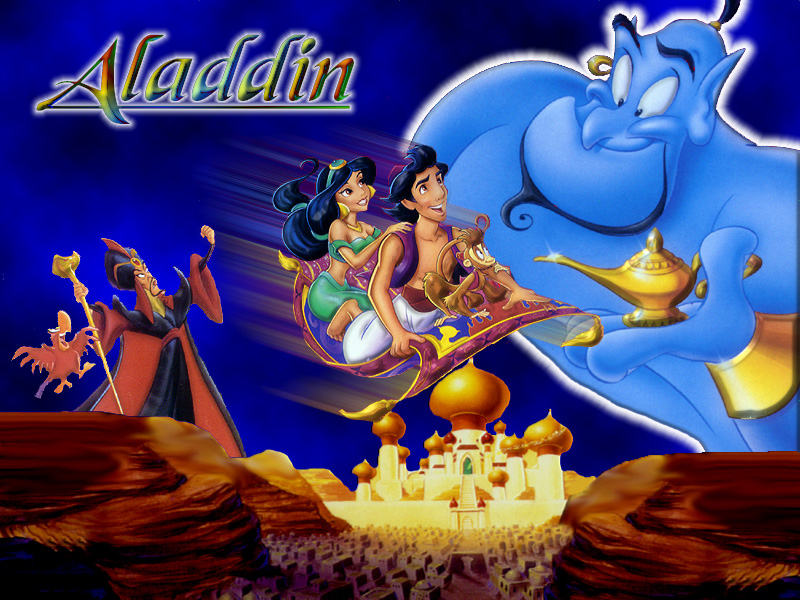
The villain in a film is the character that struggles against the hero. In Aladdin this would be Jafar. During the film he tries to kill Aladdin who is the hero in this film and tries to marry the princess who actually loves Aladdin instead of Jafar.
2) The donor:
The donor in the character who prepares the hero or gives the hero some magical object. In this film the donor would be Genie. He has got magical powers and is able to fulfill three of Aladdin's wishes. Genie is able to give Aladdin whatever he desires.
3) The magical helper:
In Aladdin there are actually two magical helpers. Abu and the magic rug. The magic rug and Abu helped Aladdin everytime he was in danger.
 4) The princess:
Jasmine is in this film the princess she marries the hero in the end.
5) Her father:
The sultan is the princesses father. In the film he decides who Jasmine, the princess, has to marry.
6) The dispatcher:
In this disney film the dispatcher ( the character who makes the task known and sends the hero off) is actually the villain. Jafar locks Aladdin up in a prison and disguises himself then in an old innocent men who wants to give Aladdin's freedom back. He tells Aladdin that he will show him a way out if he goes into the cave of wonders to get him a lamp. This is how our hero gets send on his quest.

7) The hero:
The hero in this film is of course Aladdin. He is the character who reacts to the donor and eventually weds the princess in the end. He is the protagonist.
8) False hero:
In Aladdin the false hero is the same character as the villain which is Jafar. He tells Jasmine lies so she would think that he is the good guy and that Aladdin is the bad guy. He tries to hypnotise the sultan, so that he could marry Jasmine instead of Aladdin.
macro study: Moulin Rouge!
Film studies AS: Macro study Lise descamps

| | |||
| Baz Luhrmann (written by) | | | |
| ... | |||
| ... | |||
| ... | |||
| ... | |||
| ... |
| | | |
Genre and Narrative
The genre of the film Moulin Rouge is according to the imbd website: romance, drama and musical. It was released in 2001 on the 7th of September in the UK. The film was not made in the UK though; it was filmed in Australia and in the USA.
Synopsis:
The story is about a poor writer called Christian, who moves to Montmartre in Paris to write about love. He had an obsession about love, but his problem was that he had never been in love before. Then, one day, he meets Toulouse Lautrec and he offers Christian a job as a writer for a play for the Moulin Rouge. That is where he meets Satine. Satine works in the Moulin Rouge and therefor she does not believe in love. She sells hers to men. However when she meets Christian she changes completely and they fall in love. The problem is that someone has to invest in the play. And that someone is the duke. The duke wants to invest on only one condition: Satine has to sleep with him the night before the show. This is how all the trouble begins. The duke wants Satine, but Satine wants Christian. The film is about two people who have to hide their love and fight to be able to stay with each other.
Genre
Situation:
A typical situation in a romantic drama is forbidden love. The fact that two lovers can’t be together. In Moulin Rouge this situation is used as well. Christian and Satine can’t be together, because the duke would not invest in the play anymore if he would find out about them. That is why they have to hide their love. This situation was also used in for example: Romeo + Juliet, Tristan and Isolde…
Theme:
The main theme in every romantic film is of course love. But in Moulin Rouge there are other themes as well such as jealousy, loyalty and good vs. evil. In one scene in the film Satine has to go to the duke to sleep with him. This is of course very painful for Christian and it makes him jealous to see the duke kissing with the woman he loves. Loyalty appears in the scene after this one. Right before the duke tries to sleep with her she ran away to Christian just because she could not do it and because she wanted to be loyal to him. The good vs. evil is then of course Christian vs. the duke. The viewer wants Satine to choose Christian. They live with the good character. Most viewers always hate the evil character which is in this case the duke.
Locations and backdrops:
The main location in this film is obviously the nightclub Moulin Rouge. A nightclub is a set used in a lot of romantic films, especially romantic comedies. The set is also very colourful which can be linked to happiness, joy, parties and of course love. Because in this sort of location where people are dancing and having fun, romance is something that could appear quickly. So when a viewer is watching this film and sees a lot of colours, people dancing and a nightclub they probably will connect this to the romantic film genre.
Intertextuality:
A lot of intertextuality is used in this film. Every song they sing is an already existing song. They choose the most famous songs of the 20th century and mixed those together into new songs. None of their songs is a new one. They did change them that much that you might think that. But they are all love songs written by for example Elton John, U2 or John Lennon.
 Iconography:
In many scenes in the film you can see the heart-shaped window in the elephant, which is Satine’s room. This gigantic heart refers to how great their love is. In some scenes of the film they also use fireworks. These fireworks are always used when they are kissing. That is a symbol for happiness and for the ‘fireworks’ they feel when they kiss each other. It is always linked to something good.
Narrative
Single strand:
Single strand means that the film revolves around the adventures of a single character. Moulin Rouge mainly revolves around Christian and what happened to him when he met Satine.
Non-linear:
In non-linear films the story is often told in a flashback. This is exactly what Baz Luhrmann did with his film. In the beginning you can see Christian writing his story that happened one year ago. While his writing the viewer can see what he is writing about. So the whole film is one big flashback. Sometimes they even go back to show him writing his story, so the time in which it is set changes all the time.
Closed structure:
Closed structure is mostly associated with film and may revolve around a central character and ends with a particular film, play, story or game. It is one big story and it is told in just one ‘episode’. There will not be a sequel to this story, because by the way it is written the story is closed at the ending.
Cause and effect:
Cause and effect means that one event causes another to happen and so on, as the narrative progresses. In Moulin Rouge everything that happens is caused by something that happened before. For example when Harold Zidler signs the contract with the duke he actually sells Satine to him. The contract says that Satine has to sleep with the duke whenever he wants her to. This causes the fact that Satine can’t be with Christian. There are other lies in the film that Harold Zidler tells and they all have a bad effect on someone’s life.
Closure:
The ending of a film can be open-ended or close-ended. Moulin Rouge is a close-ended or not ambiguous film. At the ending Satine dies in Christian’s arms. Someone’s death is always a close-ending, because it literally means the end of something. After that scene you can see that he finishes writing his book and that shows us that he is finally ready to move on with his life without her.
 Narrative theorist: Syd Field
I have chosen for the narrative theorist Syd Field, because the storyline fits very well with Field’s structure.
Opening image: In the beginning of the film Christian immediately says that the woman he loved is dead so you know what is going to happen. They also sing in the ‘spectacular spectacular song’ what is going to happen in the play, but the viewer does realise that the story in the play will be exactly the same as Christian’s and Satine’s story.
Inciting incident: This happens in the scene where Christian meets Satine and they fall in love. It is in the same scene that they know they will have a problem with being together, because Christian is just a poor writer and Satine is supposed to seduce the duke.
Turning point 1: The first turning point is when Christian and Satine kiss for the very first time and they immediately realise that they are causes a lot of trouble by giving in to their feelings for each other.
Pinch 1: The scene where Satine has to go to the duke to sleep with him the night before the show. That is the reminder that their love really is impossible, that they can’t be together.
Midpoint: The midpoint in Moulin Rouge is when Satine goes to Christian and says to him that she could not sleep with the duke, because she loves him too much. In this scene they decide to run away from the Moulin Rouge so they could be together. Her there could be a dramatic change in the story.
Pinch 2: The scene in which she starts packing to leave the Moulin Rouge with Christian is where the second pinch comes along. Harold Zidler sees her packing and reminds her of her contract that she has to stay with the duke and that being an actress is her dream. He convinces her to stay to pursue that dream. When Satine still decides to leave with Christian, Harold tells her that she is dying. He also tells her that if she runs away the duke’s men will kill Christian and because he is such a powerful man she knows that he can and will do that.
Turning point 2: This is the scene where she goes to Christian to tell him that he has to leave her alone, because she never really loved him. This is all just a lie to keep him save from the duke, but he does not know this. He gets thrown out of the Moulin Rouge heartbroken. Later he goes back to find out what is really going on.
Showdown: One of the last scenes is the showdown. It is the scene in which the duke gets thrown out of the Moulin Rouge during the show and when Christian and Satine can finally be together. It is not a happy ending though. Satine is dying. Right after the show she falls down in Christian’s arms and dies.
Resolution: In the very last scene you can see Christian writing his last words of his book. Now that he has told their story his finally ready to move on with his life and this is how the film ends.
Subscribe to:
Posts (Atom)